Falintil: Building the archival record

21 August 2012

August 20 is celebrated annually in Timor-Leste as the foundation day of Falintil*, the East Timorese resistance army. Falintil was founded in 1975, initially as a military wing of Fretilin, to fight in the brief civil war and then the many years of resistance to Indonesian military occupation which followed.

Timor Archives marks this event with a mention of two archival fragments on Falintil and some discussion on securing the archival record for future generations.
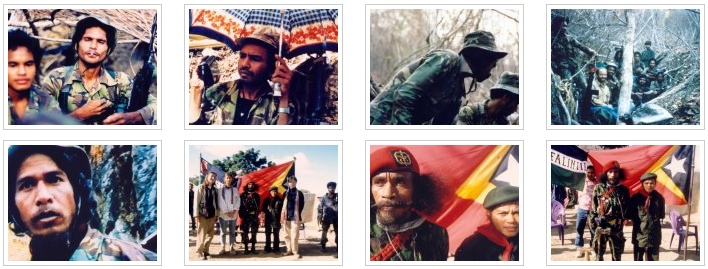
Snapshot of Tempo Semanal’s Falintil Album on Facebook.

To mark Falintil Day 2012, the East Timorese media organisation Tempo Semanal published almost 900 resistance-related images on its Facebook fan page. The photographs appear to range in time from 1975 to the early post-1999 referendum period. They include many portraits of Falintil leaders and troops and life in resistance areas.

Many of these historically important images are familiar; seen in private and public collections in Timor and internationally. Many of the images can also be seen in an online collection of East Timor’s Resistance Archive and Museum (AMRT). A 1975 set of images of Indonesian military forces in the album were featured last year on this website (see: Invasion 1975 – Photographs).

Long term archival questions
Tempo Semanal’s album is an eye-catching celebration and reminder of Falintil’s history. However, in common with similar collections of historical materials posted on Facebook and elsewhere, it is unlikely to serve as a reliable repository of archival information for future generations.

The problem with such collections is that they provide little or no information about image origins such as photographer, place, date and circumstance. Facebook users are invited or urged to add such information to the images in the online album. This is a marvellous opportunity to increase knowledge of the images, but who will take responsibility for making sure this data is kept for, and will be accessible to, future generations after Facebook disappears?

Timorese institutional solution?
Such information is most likely to be preserved by an archival institution equipped and dedicated to such tasks. Currently in Timor-Leste the AMRT leads the way in preserving and documenting archival records of the resistance, but it also has significant limitations. The Archive does not yet appear to have a regular system for seeking and recording additional information or data corrections from collection users.

What is needed is a system which not only displays archival collections but invites and allows knowledgeable users to submit missing information about individual items. Such a system needs institutional management and supervision and would be suited to organisations like the AMRT or the envisaged Institute of Memory or National Library.

—————————

Alarico Fernandes on early Falintil
We also present here a unique fragment of Falintil-related history – an audio recording of Alarico Fernandes describing some of the events in Aileu in August 1975 which were part of the formation of Falintil at that time. To listen, Click ‘play’ arrow below.

[soundcloud]http://soundcloud.com/timorarchives/alarico-fernandes-on-very[/soundcloud]

Attending a Timor strategy conference with Jose Ramos-Horta in Melbourne on 22-23 November 1975, Alarico gave a short account of the civil war and post-civil war Fretilin organisation. At the time, he was Secretary for Internal Affairs and Security in the post-civil war Fretilin administration. While the audio fragment does not decisively add new data to the known historical record of Falintil’s formation, its power lies in hearing the voice of a significant person in Fretilin’s and Falintil’s 1975-78 history.

Capturing Falintil history
The Alarico Fernandes fragment is one of an unknown number of related audio items on resistance history. Some date from 1975, others are recorded interviews with veterans during the post 1999 independence years. Many of these recordings are yet to find their way into institutional repositories for long-term preservation and access.

Alarico Fernandes is still alive but reportedly fragile in body and spirit. He, in common with many of the surviving original Timorese resistance generation, will not be with us forever. It is a matter of considerable urgency that the knowledge of the resistance generation is captured as fully as possible while it remains possible.

Ultimately this is a task for enthusiastic East Timorese and their emerging professional archival institutions.

—————————

NOTES:

* Falintil is the acronym for Forças Armadas da Libertação Nacional de Timor-Leste (Armed Forces for the National Liberation of East Timor).

Alarico Fernandes recording made by Timor Information Service, Melbourne, November 1975. Original in TIS archives.


Hunting for Timor information: Jakarta 1982

14 June 2012

An Australian Senate Inquiry into conditions in East Timor was established in 1981 following a concerted public campaign by non-government organisations and solidarity groups. The East Timor Sub-committee of the Australian Council for Overseas Aid (ACFOA) played a key role in the campaign.

Once the Inquiry was established, ACFOA was then concerned to ensure that the most up-to-date information from inside East Timor was put before it. With Indonesian military restrictions making a visit to Timor impossible, a number of aid agencies sent a private two-person mission to Indonesia to seek current data from East Timorese in Jakarta.

We summarise here the information found during this 1982 ‘hunting & gathering’ mission to Indonesia.

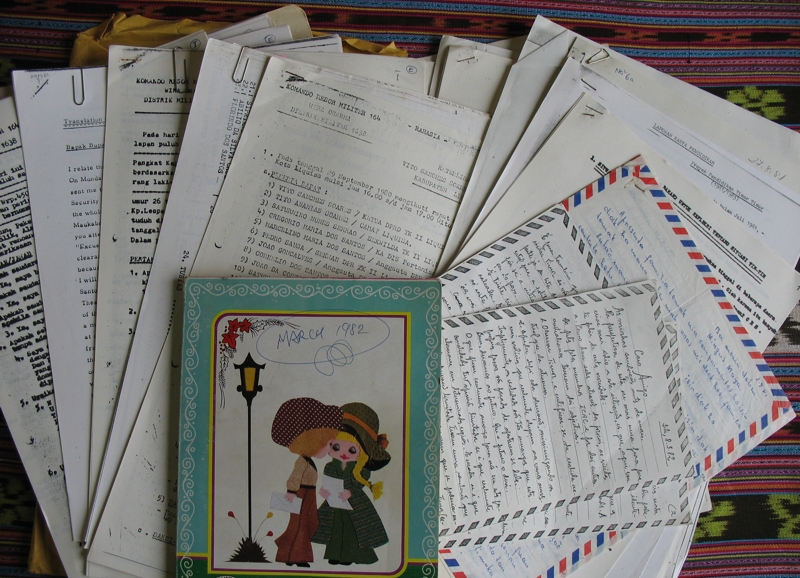
Documents and notebook of interviews collected in Jakarta, 1982.

In March 1982, John Waddingham and Chris Dureau SJ visited Jakarta for two weeks to seek information from Timorese, Indonesian and foreign sources on current conditions in East Timor.

Their arrival in Jakarta coincided with the public revelation of former Prime Minister Gough Whitlam’s visit to Timor on March 1-4. Whitlam’s visit, organised by Jakarta’s Centre for Strategic & International Studies (CSIS), was arguably also designed and timed with the Senate Inquiry in mind.

Timorese and other sources in Jakarta
There was a substantial number of East Timorese in Jakarta in 1982. A small stream of Timorese working with the Indonesian administration travelled between Dili and the capital. There was an increasing number of Timorese students in Jakarta, along with a growing number of Timorese refugees from Dili stuck in Jakarta while trying to get out of Indonesia (2).

A few Indonesian non-government organisations such as Lembaga Bantuan Hukum (LBH – Legal Aid Institute), Christian churches with Timor links and Indonesian or foreign journalists were also potential sources of information.

Given the high degree of political sensitivity of the East Timor issue in Jakarta and a strong climate of fear amongst the Timorese in particular, most meetings with potential sources were  in-confidence and on condition that they were not publicly identified.

No shortage of information
A significant body of data was collected – both in document form and through interviews with individuals with first-hand knowledge of events and conditions in Timor over the previous twelve months.

In addition to strong confirmation of the general picture of East Timorese difficulties under Indonesia occupation, the information gathered was particularly notable in these ways:
* Evidence of the growing voice of the East Timorese Catholic Church against human rights abuses.
* More data on the 1981 Indonesian ‘fence of legs’ military operation.
* Information fragments on the emergence of Xanana Gusmao as a new leader of the armed resistance.

We provide access here to some key elements of materials gathered in March 1982

Timor Dossier
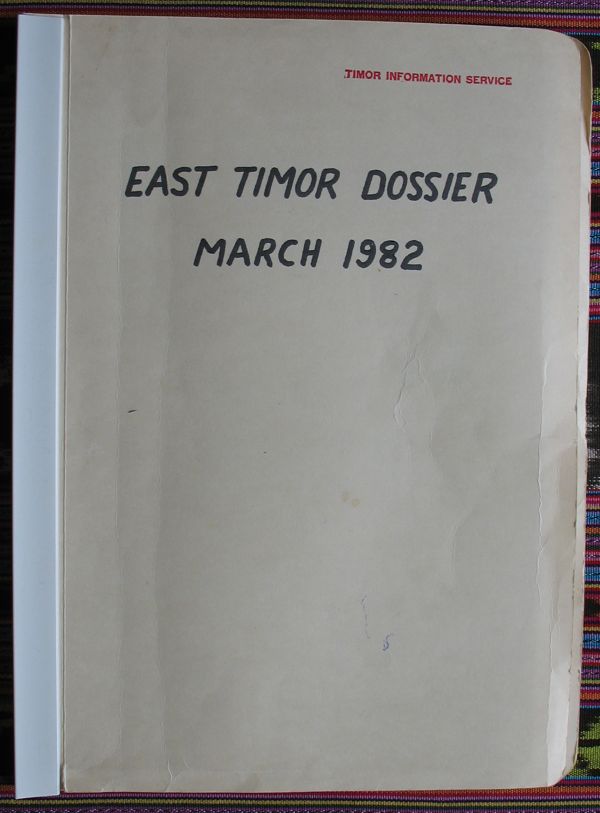
A compilation of collected material entitled East Timor Dossier March 1982 (large file; ~6Mb) was the main output of the mission. It contains rough English translations of Indonesian and Portuguese-language documents, notes of interviews with individuals, a brief guide to the content and source of the documents and a subject index to the interview material.
The Dossier was submitted to the Senate Inquiry and privately circulated to key international Timorese and non-Timorese advocates.

Interrogation materials
Other material collected included a set of transcripts of Indonesian interrogations of East Timorese accused of planning an uprising in Liquica in early 1981. To protect the source of the documents and the accused East Timorese, these items were excluded from the Dossier compilation. A small sample of the documents and rough translations is provided here.

Senate Inquiry transcript
Waddingham and Dureau gave verbal testimony on their findings to the Senate Inquiry. The evidence was given in-camera to protect Timorese sources in Jakarta. The passage of time now makes it possible to put the testimony into the public arena. Compared to the Dossier, it contains very little information of value – except perhaps to provide an insight into the efforts of some Senators to question the significance or value of the data collected.

Significance of the event
Information flowing from Jakarta-based sources prior to 1982 was intermittent, at best. The 1982 visit established that much information on developments and conditions in East Timor was available in Jakarta – albeit at some considerable personal risk to informants. Similar information-seeking visits to Jakarta in following years yielded valuable documentary insights into closed East Timor.

Thirty years later, the information in the material collected in 1982 seems fragmentary and at times contradictory. It was all those things – but such is the nature of raw data gathered in difficult circumstances. This data contributed greatly to building a picture of conditions in East Timor in 1981-82. This material also provides an insight into the limits of the data available to external advocates for East Timorese self-determination in the early 1980s.

———————

Notes
(1) Senate Standing Committee for Foreign Affairs and Defence Inquiry into ‘The Human Rights and Conditions of the People of East Timor’.
(2)Many of the refugees were East Timorese on an Australian-Indonesia-agreed list for family reunion in Australia but who were unable to pay unofficial bureaucratic bribes to obtain exit visas.

Sources
The original documents and translations presented here are held in the archival collections of Timor Information Service and the ACFOA Human Rights Office. Both collections are in CHART’s custody.


Calamity unfolding: 1978

19 April 2012

The Australian Government is restricting access to official records which may reveal the extent of its knowledge of, and what it did about, the disastrous humanitarian situation emerging in occupied East Timor in 1978 (1). We present here a small sample of media reportage which shows the minimum of what was known by the Australian government and society at that time.

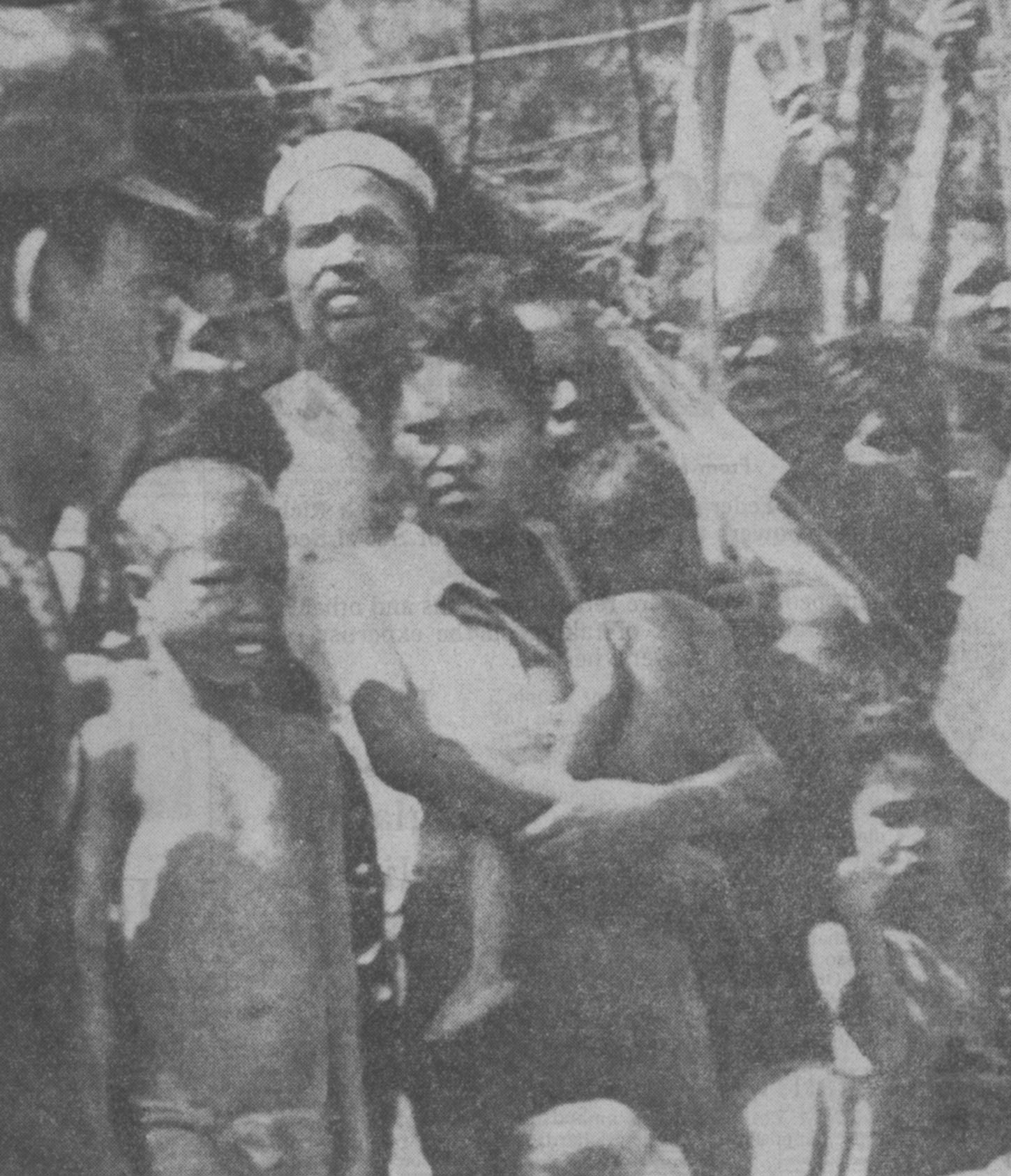
Remexio, September 1978. East Timorese internal ‘refugees’ under Indonesian control.

The Fretilin-led armed resistance through Radio Maubere broadcasts in 1977-78 often reported the poor condition of East Timorese being held in Indonesian-run ‘concentration camps’. Rare letters from East Timorese church sources and individuals in Dili also indicated rising death rates inside and outside Indonesian-controlled areas of the territory. (2)

Most of these reports were dismissed by mainstream media and governments alike as ‘unconfirmed’. By September 1978 it was no longer possible to dismiss claims of an emerging humanitarian calamity in East Timor.

Ambassadors & journalists see for themselves
In what was a very rare visit by outsiders to Indonesia-occupied East Timor, Australia’s ambassador to Indonesia, Tom Critchley travelled to the territory on 6-7 September 1978. He was with a party of 10 other-country representatives and a number of foreign journalists. The entourage was accompanied by the Indonesian Foreign Minister, Mochtar Kusumaatmadja.

The group visited Dili, Baucau, Maliana and Remexio. In Remexio, in the mountains behind Dili, the journalists and ambassadors were confronted with a sample of the condition of so-called ‘refugees from conflict’ who were now under Indonesian control.

What they saw
Journalists’ reports of what they saw in Remexio, and what they were told – including the reactions of the ambassadors themselves – left no doubt about the humanitarian situation. These reports included the following:
–  visitors were ‘shocked’ by the condition of the people they saw in Remexio
–  the children in Remexio reminded an (un-named) ambassadorof famine in Africa
–  125,000 ‘refugees’ have come into Indonesian control
–  humanitarian aid was needed fast to prevent hundreds more dying
–  outside Dili – thousands are starving and barely anyone smiles
–  in Remexio – many are naked and most have the piercing gaze, emaciated limbs and distended bellies of advanced malnutrition
–  conditions in other ‘transit camps’ such as Suai reportedly ‘much worse’
–  East Timor described as being ‘in a state of deep, collective trauma’.

Click links immediately below to read a sample of media reportage from the ambassadors’ visit.
The Herald (Melbourne) 11 September 1978
The Herald (Melbourne) 12 September 1978
Far Eastern Economic Review 29 September 1978

Australian commentary
Formal editorial comment by Australian media on these reports was unambiguous.

The national daily, The Australian (12 September 1978), said “Australia has a clear and urgent task to perform: to give immediate aid..quickly, with no strings attached..”. It responded to an Australian government statement of being ‘sympathetic’ to Indonesian requests for aid with a clear challenge: “Do we have to wait to be asked?”

Similar editorial comments were published in The Herald (Melb.), 11 September & 12 September 1978

Conservative foreign affairs and defence journalist, Douglas Wilkie, was very direct in concluding what was happening to the East Timorese and offered a scathing assessment of immediate Australian government responses to humanitarian need. “Tens of thousands of Timorese have been starved into submission by the Indonesians….The [Indonesian] generals must not be seen as begging for international aid to get them out of a horror situation of their own deliberate making. And Canberra, it seems, feels obliged to play along.” See The Sun (Melbourne) 13 September 1978.

A further reflection of Australian society’s knowledge and concern about the situation came in the form of a cross-party petition from 76 members of the national parliament. Addressed to the UN Secretary-General, Kurt Waldheim, the petition called on “all member nations to act to facilitate the admission of International Red Cross into East Timor.”  Canberra Times 3 October 1978.

This sample of material shows very clearly that the government, the parliamentarians and the mainstream media knew what conditions were prevailing in East Timor and that major humanitarian relief aid was required to alleviate the conditions and prevent an even worse catastrophe.

It is a matter of historical record that another full twelve months passed before the Indonesian Government allowed International Red Cross and Catholic Relief Services (USA) to begin emergency humanitarian aid programs in East Timor.

Access to official records
Responsibility for the exclusion of International Red Cross  from East Timor from December 1975 to September 1979 rests finally with particular Suharto Government military and civilian officials. It will be a matter for concerned Indonesian citizens to seek access to official records in order to more fully understand its government’s actions on this matter.

The public record of the September 1978 visit alone reveals undeniable Australian and other-government knowledge of an already desperate humanitarian situation in East Timor. What remains hidden, however, is an answer to the question: what diplomatic efforts did Australia (and other countries with this knowledge)  make to persuade Indonesia to lift its ban on international humanitarian assistance to the East Timorese?

The circumstantial evidence suggests the diplomacy was so quiet it was barely heard. In Australia’s case, public release of the relevant archival records will  help settle this important question.

NOTES

(1) Thanks again to researcher and historian Clinton Fernandes for his work to obtain access to official Australian archival material being kept secret. See this media item on his most recent work. See also Pat Walsh’s commentary on the issue and a more recent (May 14) backgrounder by Clinton Fernandes. Earlier Fernandes work to obtain release of Australian materials can be found in this 2011 Timor Archives item.

(2) See, for example, Radio Maubere and other material from East Timor published in 1977-78 issues of the advocacy newsletters Timor Information Service and East Timor News.

The most detailed account of the conditions of East Timorese at this time, and the reasons, can be found in Chega!, the 2005 report of Timor-Leste’s Commission for Reception, Truth & Reconciliation. See Chapter 7.3, Forced displacement and famine. Warning: Harrowing reading.

Newspaper clippings presented here are drawn from the archives of Timor Information Service, Melbourne, 1975-1984.


March 1982: Whitlam & Hastings in Timor

1 March 2012

Thirty years ago, former Australian Prime Minister Gough Whitlam threw his considerable public weight behind the case for East Timor’s integration into Indonesia.

His robust submissions* and appearances before an Australian Senate Inquiry in May 1982 and the United Nations Decolonisation Committee in November that same year were somewhat influential in the Australian debate on Timor at the time.

Whitlam’s public interventions were based largely on a visit he made to East Timor in March 1982. We present here an annotated selection of primary source materials on that decidedly controversial visit.

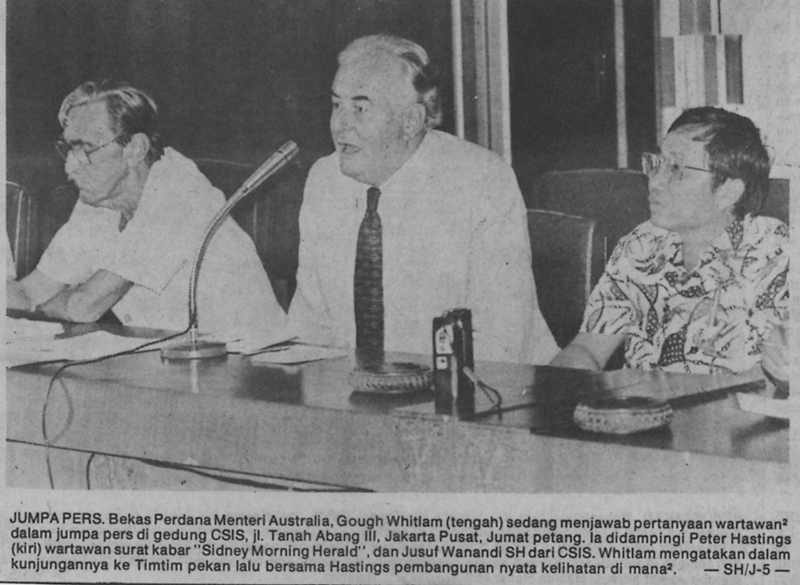
Media Conference, Centre for Strategic & International Studies, Jakarta.        From left: Peter Hastings, Gough Whitlam and Jusuf Wanandi.     Source: Sinar Harapan, 5 March 1982

Gough Whitlam and influential veteran defence and foreign affairs journalist Peter Hastings travelled to East Timor on 1 March 1982. They were in Timor for two nights, returning to Jakarta late evening on March 4. In Timor, they were able to travel by International Red Cross (ICRC) helicopter, in the company of ICRC delegate Cedric Neukomm. Based in Dili, they visited Ermera, Suai, Maliana, Atauro, Natarbora, Dilor, Lospalos and Luro. Both men held a joint media conference in Jakarta on March 5.

Context/Origins
The main focus of Whitlam’s attention was to show that Australian media reports in January 1982 of ‘famine’ in Timor were false. It is reasonable to assume that these reports, ultimately attributed to the head of Timor’s Catholic Church, Monsignor Lopes, were a primary trigger for the trip. The forthcoming Australian Senate Inquiry may also have been a factor behind the visit.

The available public record does not show who exactly initiated plans for the Timor visit.  Peter Hastings was invited to visit Timor by the Indonesian Embassy (Editorial, Canberra Times, 13 March 1982) though the participants and organisers remained rather coy about the underlying decision-making. At the Indonesian end the visit was organised and facilitated by the Jakarta-based Centre for Strategic and International Studies (CSIS) which, since 1974, had been directly connected to Indonesian special operations to achieve East Timorese incorporation into Indonesia.
Article, Herald (Melb.), 3 March 1982
Article, The Age, 4 March 1982
Article, The Australian, 4 March 1982

The ‘famine’ claim
Australian media reports in January 1982 of ‘famine’ in Timor were based on a media release from Australian Catholic Relief (ACR). The ACR media release was in turn based on a November 1981 exchange of correspondence between Monsignor Lopes and Bishop John Gerry who was then ACR Chairman. The documents show that Mgr Lopes’ passing reference to ‘expected famine’ is a repeat of a term (the origins of which are unclear) used originally by Bp Gerry rather than an outright claim by Lopes of  ‘famine’. The ACR media release and subsequent media headlines appear to carry more responsibility for the ‘famine’ claim than anything directly attributable to Mgr Lopes.
Bishop JJ Gerry letter to Mgr Lopes, 11 November 1981
Mgr Lopes reply to Bishop Gerry, 19 November 1981
ACR Press Release, 6 January 1982
Article, The Age, 11 January 1982
Article, Northern Territory News, 11 January 1982
Editorial, Sydney Morning Herald (SMH), 12 January 1982

Whitlam and Hastings reports
Whitlam and Hastings both published or broadcast their findings and opinions. Whitlam’s attentions were focussed on Mgr Lopes, notably calling him in an ABC interview (see below) “a liar..(and)..a mendacious and malicious correspondent”. Hastings’ accounts contained much more detail on actual conditions in the occupied territory.
Transcript of Whitlam/Hastings press conference, Jakarta, 5 March 1982
Peter Hastings article, SMH, 6 March 1982
Peter Hastings article, SMH, 8 March 1982
Peter Hastings article, The Age, 8 March 1982
Peter Hastings article, SMH, 9 March 1982
Gough Whitlam interview on ABC Radio, 26 March 1982
Gough Whitlam article, The Bulletin, 30 March 1982
Peter Hastings interview, ABC Radio, 20 April 1982

Media reportage of visit
The visit itself attracted brief media coverage in Australia and Indonesia, including some editorials on the significance of the trip and its reported findings. While Indonesian media reports were uncritical of the Whitlam findings, some other mainstream media were less certain of them.

Article, The Age, 6 March 1982
Editorial, Sinar Harapan, 6 March 1982
Article, The Indonesia Times, 8 March 1982
Editorial, The Indonesia Times, 8 March 1982
Article, The Age, 12 March 1982
Editorial, Canberra Times, 13 March 1982
Article, Far Eastern Economic Review

Commentary
In Australia, Mr Whitlam’s assertions in particular attracted the most analysis and commentary from advocates for East Timor. A feature of the more detailed commentary was to use Peter Hastings’ Timor visit accounts to demonstrate shortcomings in those of Mr Whitlam. Whitlam’s case found some public support, including from Bob Santamaria who – since 1975 – had actively campaigned publicly (through his Newsweekly periodical) and privately in Catholic circles against advocates for East Timorese self-determination.
Bob Richards (unpublished?) letter to the editor, 7 March 1982
ACFOA (unpublished?) Letter to Editor, 12 March 1982
Newsweekly Editorial, 10 March 1982
Newsweekly Editorial, 17 March 1982
Jim Dunn article, The Age, 17 March 1982
David Scott (unpublished?) letter to Editor, 25 March 1982
Pat Walsh notes for ACFOA Chairperson, 30 March 1982
Former WWII Commando, Cliff Morris letter to Whitlam, 30 March 1982
Peter McCawley letter to Editor, Canberra Times 31 March 1982
Letters to Editor, The Bulletin, 20 April 1982
Jose Ramos-Horta Letter to Editor, SMH 22 April 1982
Pat Walsh article, Arena, No.60, 1982
Timor Information Service article, March/April 1982

International Red Cross
A surprising element of the Whitlam/Hastings trip to Timor was the involvement of International Red Cross (ICRC). The visitors travelled to parts of Timor in the ICRC helicopter accompanied by an ICRC delegate. Much was made of this fact in Mr Whitlam’s claims about conditions in the territory; he was able to effectively draw on ICRC authority to support his assertions. The Australian Council for Overseas Aid certainly wondered about ICRC’s involvement in a visit which became an overtly political exercise.
ACFOA Draft letter to ICRC (undated)

Concluding comment
Gough Whitlam’s direct attack on Mgr Lopes probably aided calls in Indonesia for the monsignor’s removal from Timor by the Vatican in 1983. He also had some transient impact on the public debate in Australia and inside the Labor Party, but other events in 1983 – a formal ceasefire and subsequent major Indonesian military offensive – rendered his 1982 claims outdated.

The documentary record of the Whitlam/Hastings Timor visit remains valuable. It offers a good insight into the approach of Mr Whitlam who, at the time, was one of the very few public figures to campaign publicly in Australia against East Timorese self-determination. Combined with the sample of reactions to Whitlam’s assertions, the record also provides an insight into the nature of the debate in Australia about East Timor at that time.

———

* Records of these submissions can be found among a series of Timor documents available online through the Whitlam Institute at the University of Western Sydney.

Sources: The selected documents presented here come from the archives of Timor Information Service and the ACFOA Human Rights Office. Both collections are in CHART custody in Melbourne and will be subject to an extensive digitisation program during 2012.

Note on Copyright:  If any original creators of the materials presented wish to assert their copyright ownership and object to our usage here, please contact us immediately and we will remove the item.


CHART co-founder honoured for Timor work

27 January 2012

Pat Walsh – as depicted by Tim Lindsey

In recognition of decades of human rights advocacy, Pat Walsh has been awarded the Order of Australia (AM). The formal citation for the award reads: “For service to the international community in the Asia-Pacific region as an advocate for human rights, particularly in Timor-Leste”.

Pat Walsh co-founded CHART with John Waddingham in Melbourne in 2000. Members of CHART, along with the hundreds of Timorese, Australians and others who know of Pat’s remarkable work, congratulate him on this long-deserved official national recognition in Australia.

Decades of Timor work
Pat began his involvement with East Timor in the mid-1970s as chaplain of the Young Christian Students (YCS) and a member of Melbourne’s Australia-East Timor Association.

He began voluntarily working full-time on Timor in 1978 with the Christian Churches-funded Action for World Development. In the early 1980s, he was employed by the Australian Council for Overseas Aid (ACFOA) as a consultant to ACFOA’s East Timor Sub-committee where he quickly established a reputation, both in Australia and internationally, for innovative, careful, determined research, writing and action.

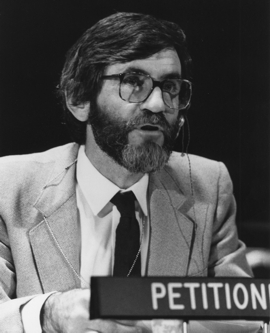
Walsh petitioning the UN Decolonisation Committee, New York, 1986

Highlights of his work in this period include driving the establishment of the 1982 Senate Inquiry on Timor,  founding the Timorese refugees support group, RAFT (Re-unite in Australia Families from Timor) and co-founding Christians in Solidarity with East Timor (CISET) and Inside Indonesia magazine.

Pat became the inaugural director of ACFOA’s Human Rights Program in 1985 where he continued to work on Timor and other regional human rights matters for the next 15 years. Work in this period included visits to Indonesia (working on Australian and international links with Indonesian non-government organisations) and Timor (after 1989).  He drove the formation of the East Timor Talks Campaign,  assisted in the formation of the East Timorese-run East Timor Human Rights Centre in Melbourne and was a member of the official Australian observer mission for the 1999 independence ballot.

From 2000, Pat lived for a decade in the newly-independent Timor-Leste. His principal work was first as a consultant in the human rights office of  United Nations Transitional Administration (UNTAET) where he was instrumental in the establishment and conduct of Timor-Leste’s Commission for Reception, Truth and Reconciliation (CAVR). Since 2005, he has been senior advisor to the the Post-CAVR Technical Secretariat which is charged with promoting CAVR’s monumental report, Chega!, and preserving the archives of CAVR’s work.

Some insights into Pat’s work and experience in Timor-Leste can be found in his recently published book, At the scene of the crime: Essays, reflections and poetry on East Timor, 1999-2010*.

In 2009, the State of Timor-Leste awarded Pat Walsh the Insignia of the Order of Timor-Leste, for his “exemplary service to humanity”.

Pat Walsh Archives

Pat Walsh Timor archival collection

The archival record of Pat Walsh’s Timor advocacy work in Melbourne, 1975-2000 is largely intact.

This voluminous collection contains the day-to-day record of his work – ranging from hand-written notes of decades of phone conversations through countless items of correspondence to a marvellous collection of documents from inside Indonesian-occupied East Timor.

This archival collection is one of the premiere Australian non-government, privately-held collections of Timor materials. It is a treasure trove of primary source research materials on what happened inside occupied East Timor and what actions were taken in Australia and internationally on the issue.

The collection is in the custody of CHART and will be the focus of a major project in 2012 to fully document its contents and to digitise extensive selections of material for eventual access in Timor-Leste. CHART has prepared a draft preliminary guide to the collection contents.

_______________________________________

* Published by Mosaic Press, Melbourne, 2011. See here for purchase information.

See also: Pat Walsh Website.