Timor’s National Archive advancing

8 April 2016

CHART’s John Waddingham visited Timor-Leste in March 2016 to assess recent archival developments. In the first of several articles, he reports on continuing activity at Timor-Leste’s first but least well-known institution, the National Archive.
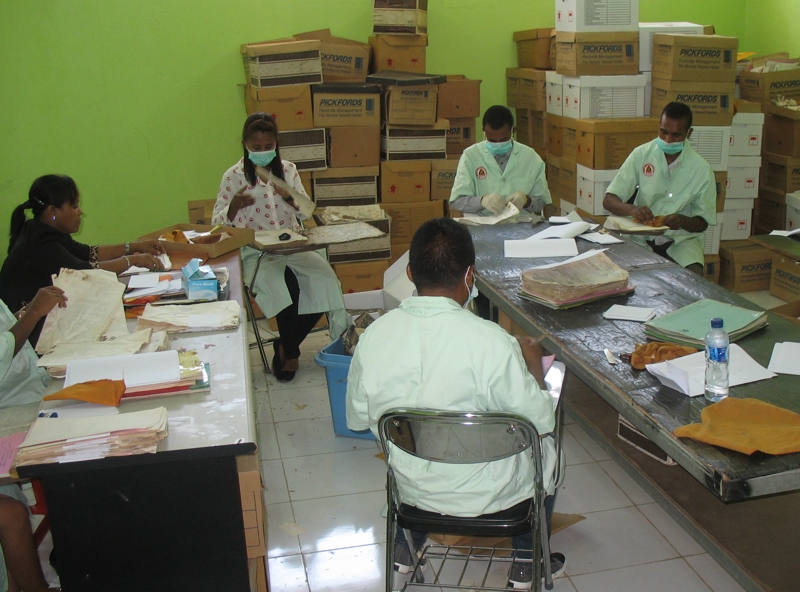
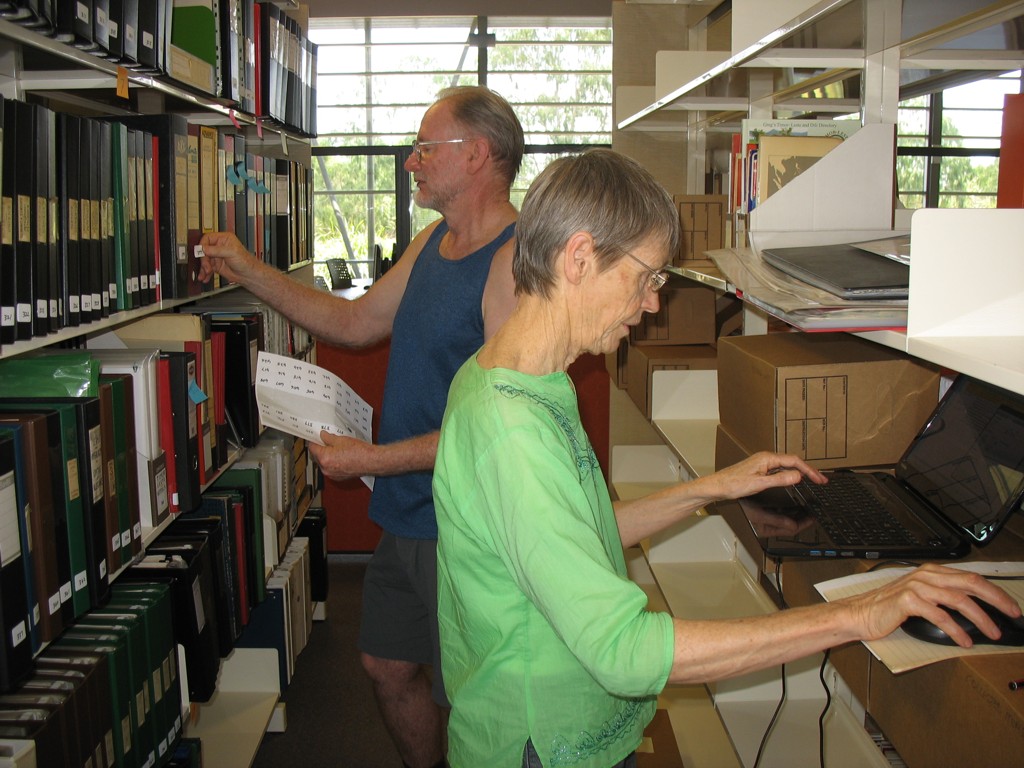
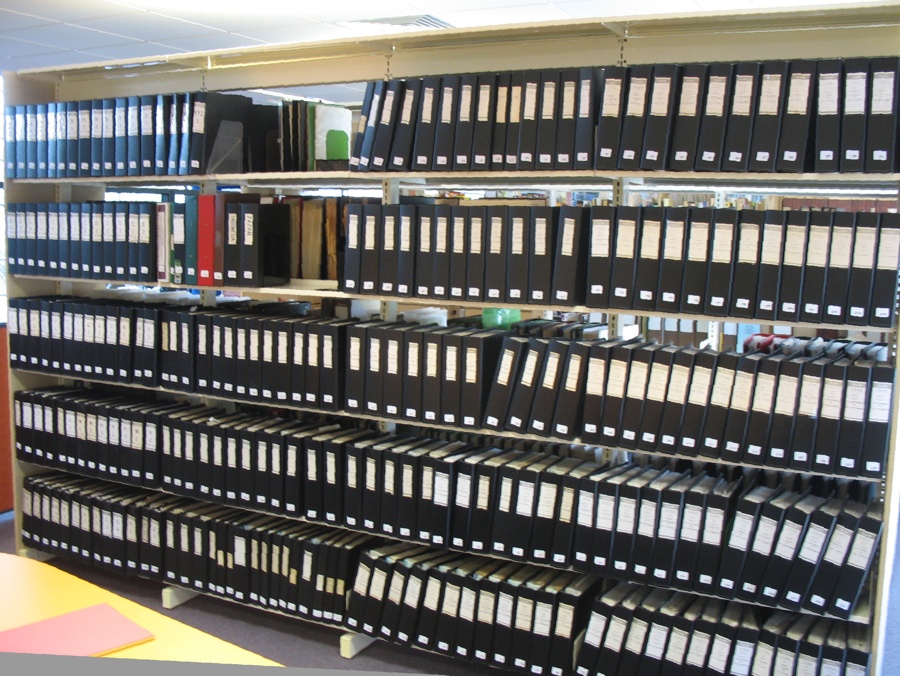
Hive of activity: National Archives staff cleaning and rehousing historical files.

Hive of activity: National Archives staff cleaning and rehousing historical files. [CHART photo]

Timor-Leste’s National Archive collects and preserves the records of government and administration dating forward from the Portuguese colonial era. Observations in 2015 that the National Archive appeared to be emerging from a decade of obscurity were confirmed in March 2016. The archive is now a hive of activity and senior staff are optimistic about its immediate future development.

Compared to other archives in Timor, the Archive operates on a relatively small budget (USD$259,000 in 2016). There are indications that the current responsible Minister for State Administration, Dionisio Babo Soares, is championing the expansion of the Archive, including a significant capital injection for a new purpose-built repository.

Current activities observed at the Archive included cleaning and re-housing a very large volume of Indonesian-era administration records and conservation/repair work on fragile collection items. The latter work arises from recent training and equipment donations from the National Archive of Brazil. The Archive has also put itself more in the public eye through a display of some of its historical materials in the exhibition space at the Resistance Archive & Museum.

In addition to the Brasil connection, the Archive is establishing relationships with other National Archives, including Portugal and Indonesia. A previous connection to Australian archives – a donation of archival storage materials to the Archive in the early 2000s – has not yet been revived. However, the Australian Bureau of Meteorology equipped and trained Archive staff to scan Portuguese-era weather records to be added to international climate change data.

Renewed activity in recent years to draw-up the legislative framework for the National Archive functions and responsibilities has yet to be finalised. And in common with all Timor-Leste archives, the National Archive has few if any staff with formal archival qualifications. We understand this is seen by the National Archive as a critical issue and it is exploring options for change.

Collection Access
The National Archive holds an extensive collection of Portuguese-era administrative records some of which, reportedly, are not even held in official Portuguese archives. Other holdings include yet-to-be described Indonesian and United Nations administration records and an unknown volume of post-2002 Timor-Leste government materials.

The Archive does not yet appear to have formal public documentation on conditions for access but researchers have been able, on application, to access Portuguese-era records. Creation of a dedicated researcher-access room within the existing facility is planned. The large backlog of unprocessed post-Portuguese-era records means they will not be accessible to researchers in the near future.


Kevin Sherlock Collection: Work in progress

28 September 2015

The late Kevin Sherlock, Timor bibliographer and collector extraordinaire, willed his outstanding archive to the Charles Darwin University Library. CHART’s John Waddingham and Cecily Gilbert have just completed two weeks in Darwin assisting the Library to prepare the collection for researcher access.

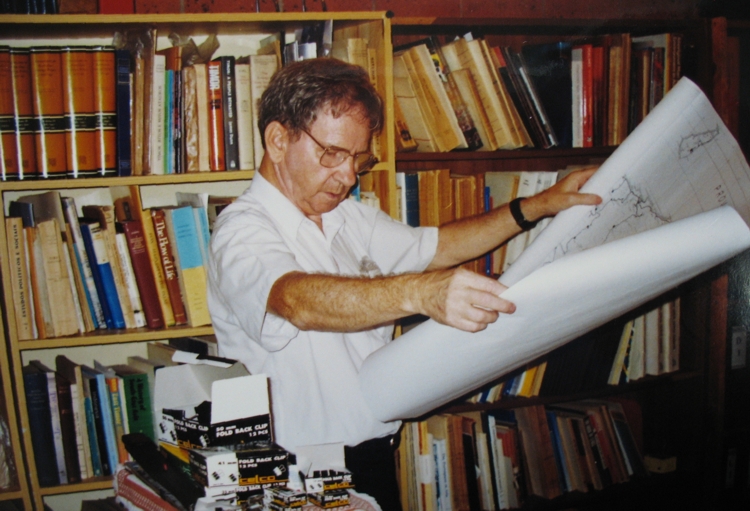
Kevin Sherlock with his expanding collection, c1980s. [Source: ETRA Archives]

Kevin Sherlock with his expanding collection, c1980s. [Source: ETRA Archives]

Hundreds of Timor-related books and journals collected by Kevin Sherlock are now visible through the CDU Library catalogue. Arrangement and description of Kevin’s vast collection of other collected materials and his own bibliographic and research work on them remains a work in progress.

The document archive
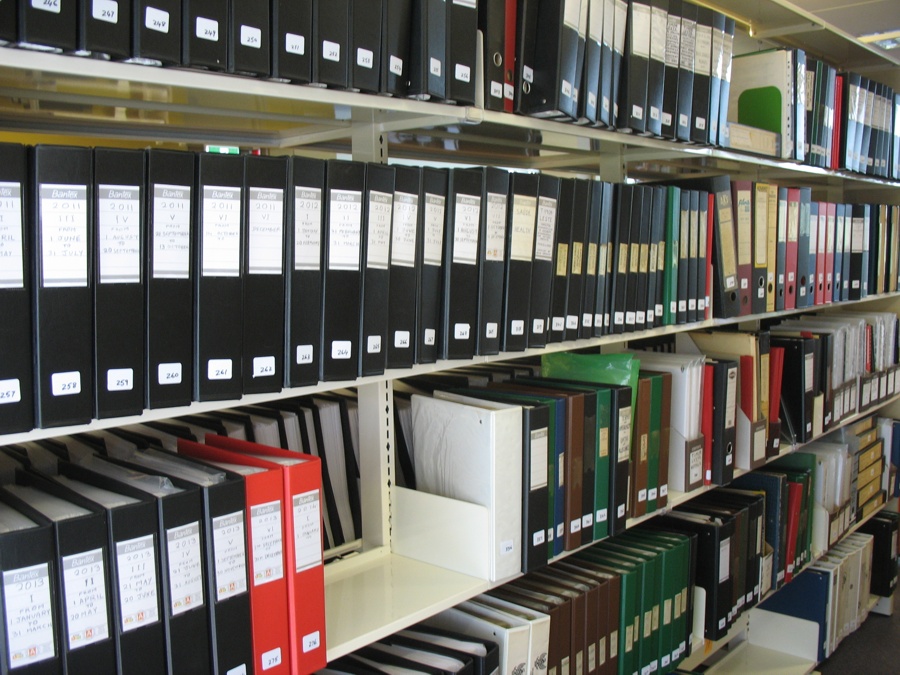
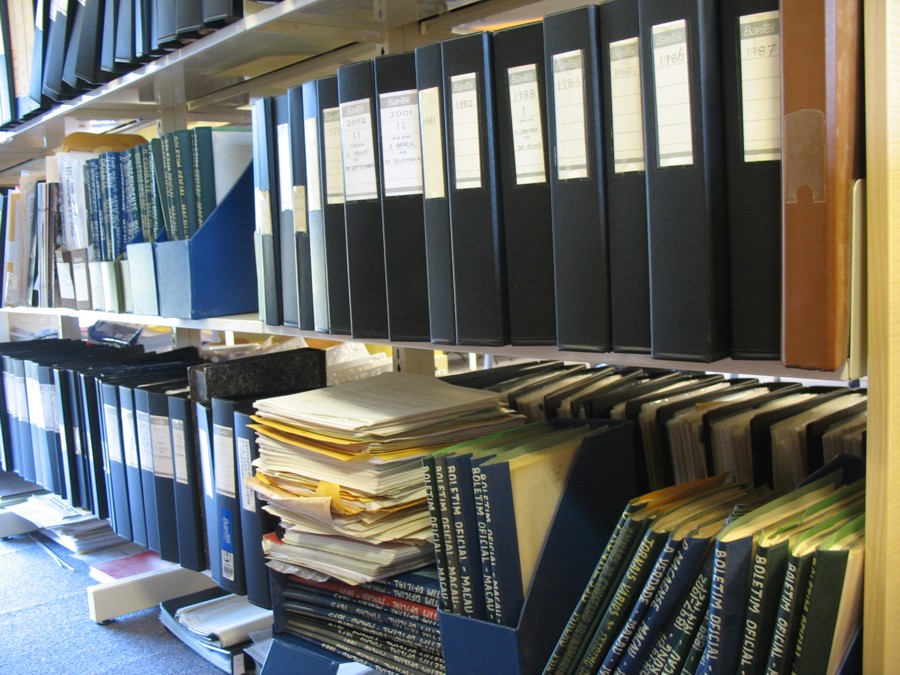
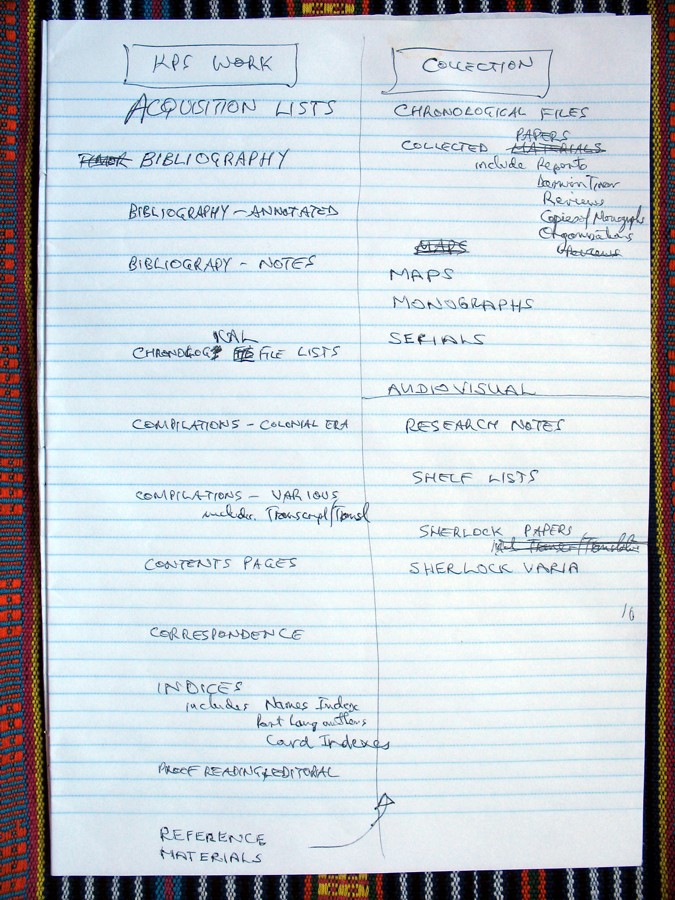
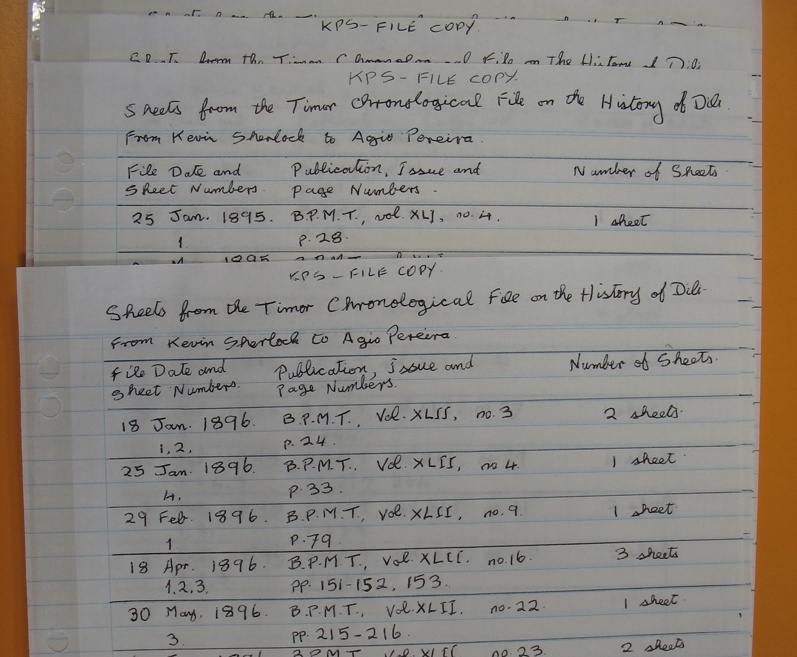
The large non-monograph component of the collection is visually dominated by labelled folders containing collected articles, pamphlets and unpublished items,’chronological files’ containing copies of Portuguese official bulletins from the mid-19th century and newsclippings up to mid-2014. Additionally, Kevin constructed from these collected sources, compilations of colonial-era materials on a range of research topics like administration, health, education, shipping, roads and buildings.

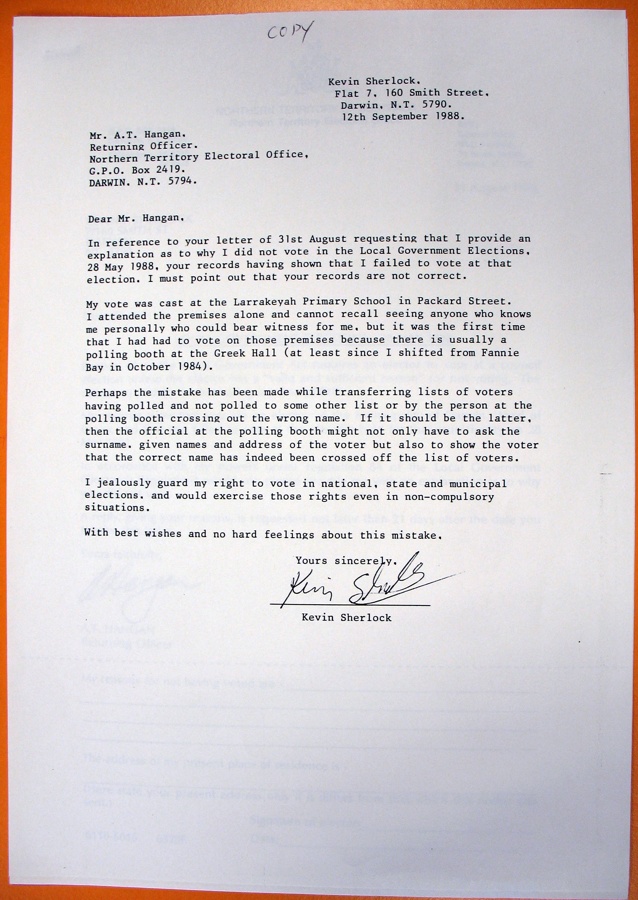
Complementing these folders is a bewildering array of hand-written and typed indices, along with a comprehensive record of correspondence with authors, academics, journalists and activists from around the world who sought Kevin’s always-generous sharing of knowledge, materials and meticulous proof reading expertise.

The particular strength of the collection is its assemblage of pre-1975 Portuguese colonial era materials already mentioned. The post-1975 materials is predominantly published materials from the many actors in the East Timor political issue, including a fair sample of rarely-seen Indonesian government items and a good number of unpublished academic higher-degree theses.

More detail on the collection contents can be seen in Kevin’s 450-page, but incomplete, 2002 shelf list.

CHART’s work
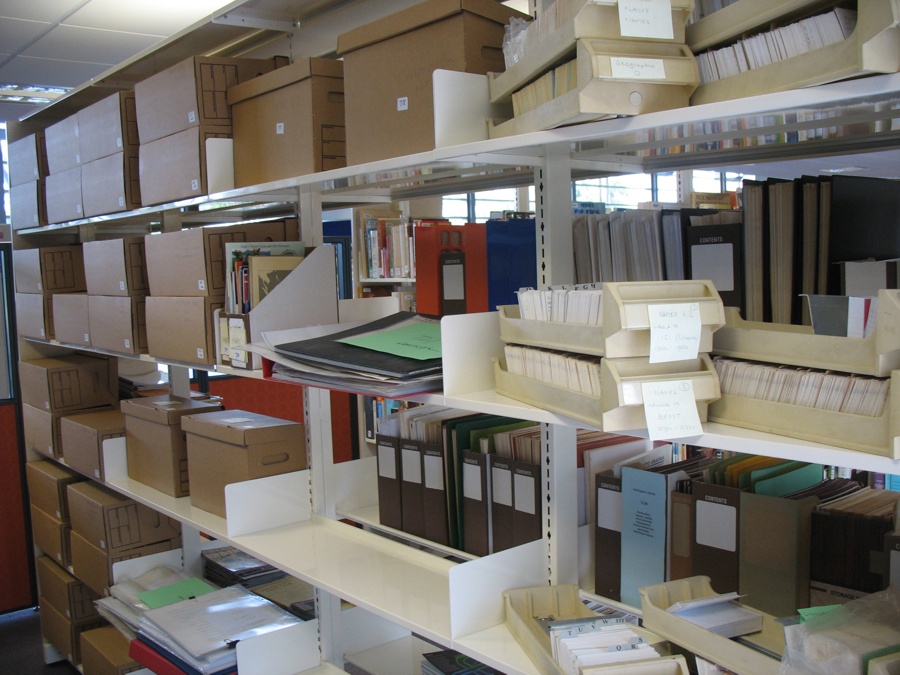
Our first task was to restore order to the hundreds of labelled folders and then add to them a significant number of unlabelled folders.

More difficult was the substantial volume of loose or unstructured materials. These were a surprise given Kevin’s very evident devotion to order but are perhaps a reflection of seriously declining health over his final decade. Our approach was to derive a provisional list of folder sequences or ‘series’ from the labelled folders and sort the loose papers into manilla folder sequences reflecting that list.

The end product of our work for the CDU Library will be data about the collection in the form of a ‘finding aid’ for researchers to gain an overview of the collection structure and to identify materials they wish to examine.

Labelled folders: Chronologies, compilations, indexes, correspondence and much more.

Labelled folders: Chronologies, compilations, indexes, correspondence and much more. [CHART photo]

Missing Kevin
This is a seriously impressive research collection which will be much consulted in the years to come. What is clearly missing from it is Kevin himself. He was the living key to exploiting the richness of his holdings. It will take some time for archivists and researchers to unlock some of the secrets of his indexing work and filing systems to again realise the full value of his materials.

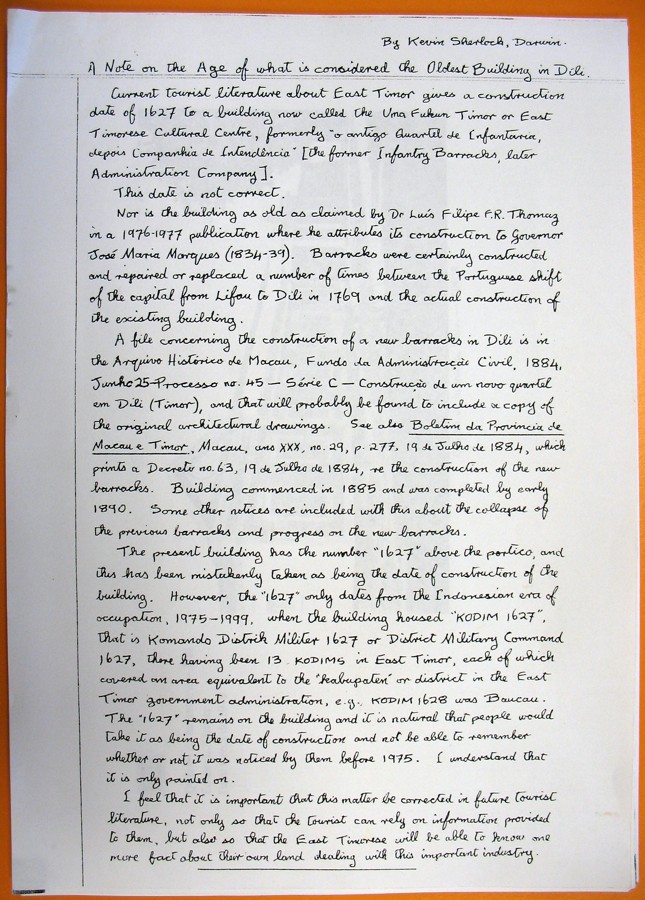
Kevin is however present in another way. The collection as a whole, and in its many parts, is an enduring testament to this extraordinary person. For a tiny taste: a sample of his data sources research for others, his quiet humour, and a note on Dili’s ‘oldest building’ – the latter being exactly the kind of work that earned him the ‘Sherlock Holmes’ moniker from one long-time correspondent.

Accessing the collection
CDU Library is preparing to launch the collection and make it available for researcher access. The exact timing remains unclear; the Library is rightly ensuring that they first have systems in place to protect the physical integrity of the collection for the generations of researchers to come.

Pictures of CHART Work, Darwin, 10-23 September 2015

An archivist's joy: A grand mix of labelled folders, journals and unsorted document clumps.

An archivist’s bread and butter: A grand mix of labelled folders, journals and unsorted document clumps.

Sorting the unsorted (shelves at right) into folders and then into archive boxes (rear, left). {CHART photo]

Sorting the unsorted (on shelves at right) into folders (on table) and then into archive boxes (rear, left). [CHART photo]

kps-4arms_9606

Teamwork: Adding unique number IDs to folders (John) and updating collection data (Cecily). [CHART photo]

More of those sorted, Kevin Sherlock-labelled folders. [CHART photo]

More of those sorted, Kevin Sherlock-labelled folders. [CHART photo]

In progress: Thirty archive boxes (at left) of now-sorted but not fully described materials. [CHART photo]

In progress: Thirty archive boxes (at left) of now-sorted but not fully described materials. [CHART photo]

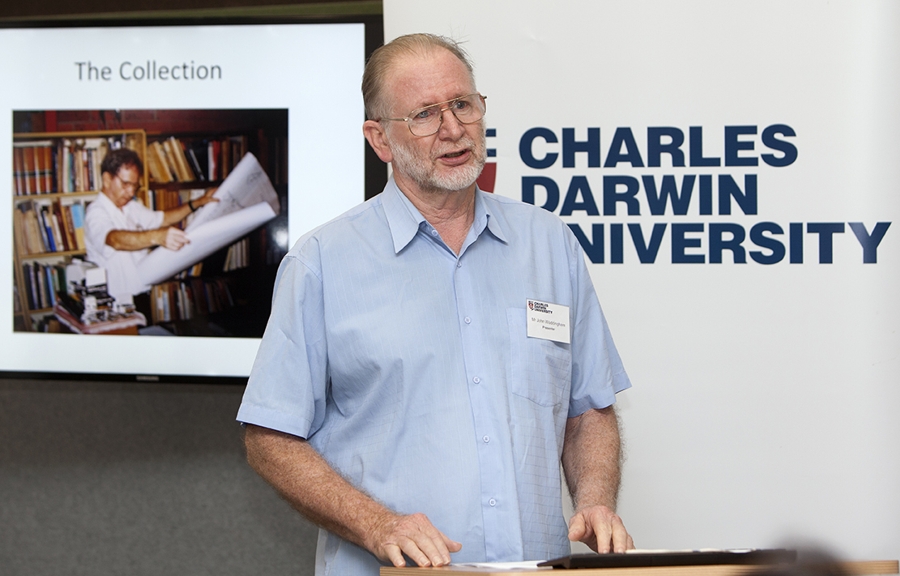
Introducing the Sherlock collection to a CDU 'Engagement with Timor-Leste' seminar, 21 Sept 2015. [Source: CDU]

Introducing the Sherlock collection to a CDU ‘Engagement with Timor-Leste’ seminar, 21 Sept 2015. [Source: CDU]

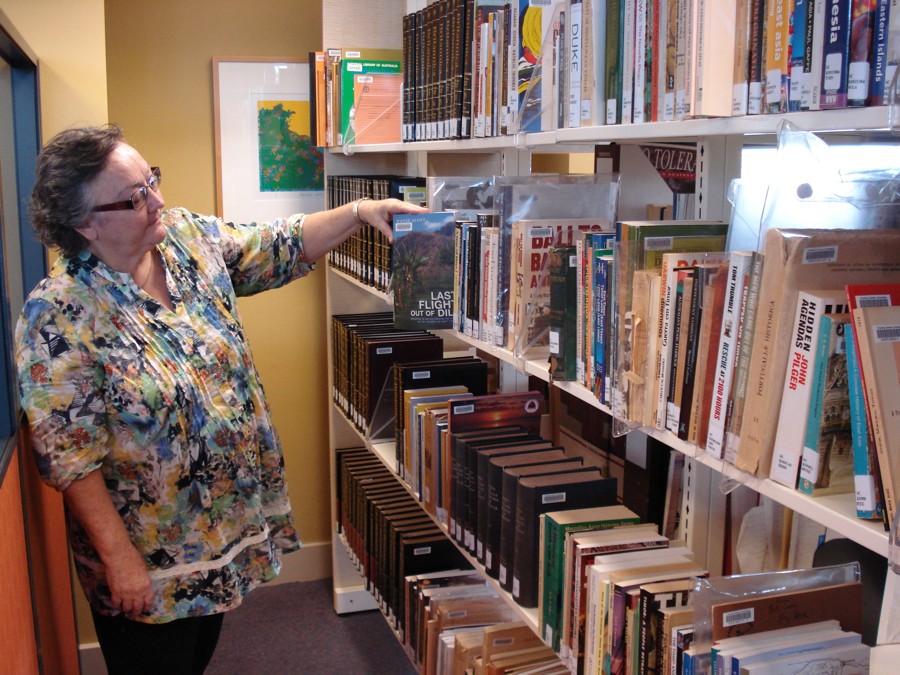
CDU Library Director Ruth Quinn with some of the catalogued monographs in the Sherlock Collection. [CHART photo]

CDU Library Director Ruth Quinn, responsible for arrangements with Kevin over his bequest, with some of the catalogued monographs in the Sherlock Collection. [CHART photo]

Acknowledgements
Many thanks to CDU Library for covering travel and other costs for our work in Darwin. Particular thanks to the retiring CDU Director of Library Services, Ruth Quinn, CDU archivist Stephen Hamilton, and Palmerston campus librarian Tita Allom and staff for their friendly welcome and support.

Many thanks also to Mauri Heading SJ for his generous provision of always-comradely accommodation. And to Flavia Pires, a long-time friend and help for Kevin, and who spread his ashes in the Timor mountains, for her friendly support.


Wes: Timor archives of key Darwin activist

10 August 2015

Rob Wesley-Smith has been the most continuously identifiable public face of East Timor political activism in Darwin since 1974. CHART’s John Waddingham and Cecily Gilbert examined his Timor papers in July and will assist him to prepare the collection for long-term preservation and access.

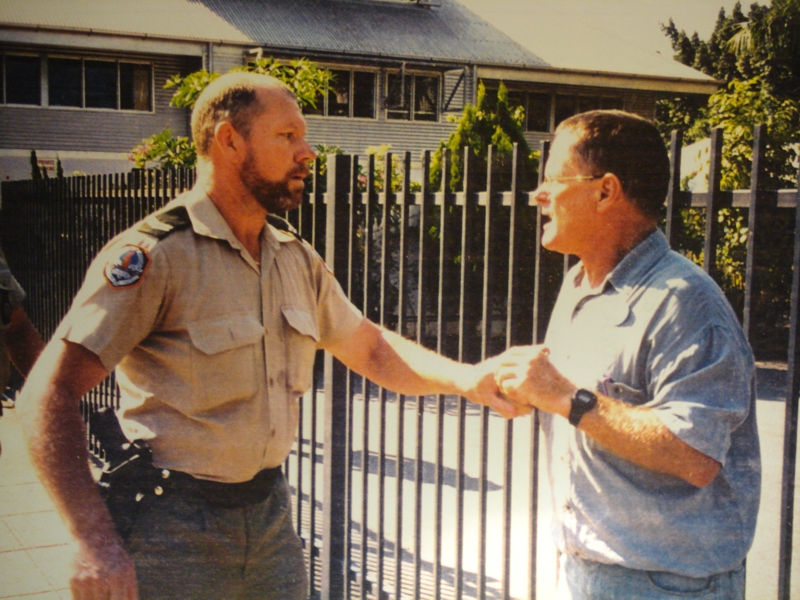
Konfrontasi: Wes being arrested outside the Indonesian Consulate, Darwin, 1999. [Source: Rob Wesley-Smith]

Konfrontasi: Wes being arrested outside the Indonesian Consulate, Darwin, 1999. [Source: Rob Wesley-Smith]

Known universally as ‘Wes’, Rob Wesley-Smith is a unique identity in Australia’s Asian-frontier city, Darwin. An agronomist by profession, Wes brought unbounded energy to his formal work and to his persistent public commentary on Darwin or Northern Territory issues. Driven by principles of social justice, he was directly involved in Aboriginal issues, including the landmark Gurindji/Wave Hill events in the 1960s and 70s. And then there was Timor….

Timor activism

Wes’ Timor work began sometime in 1974. A fragile and fading document in his archive shows the early Australian activist Denis Freney asking Wes and unionist Warwick Neilley to arrange public meetings for Jose Ramos-Horta’s visit to Darwin in December 1974 and suggesting they establish the Campaign for Independent East Timor (CIET) at the same time.

Following the 7 December 1975 Indonesian invasion, Wes became an inveterate letter-writer and key organiser of public demonstrations. He was involved in monitoring and conducting radio communications with the Fretilin-led resistance inside Timor, though not without some frictions with Communist Party of Australia activists such as the legendary Darwin unionist and activist Brian Manning.

Breaking the blockade

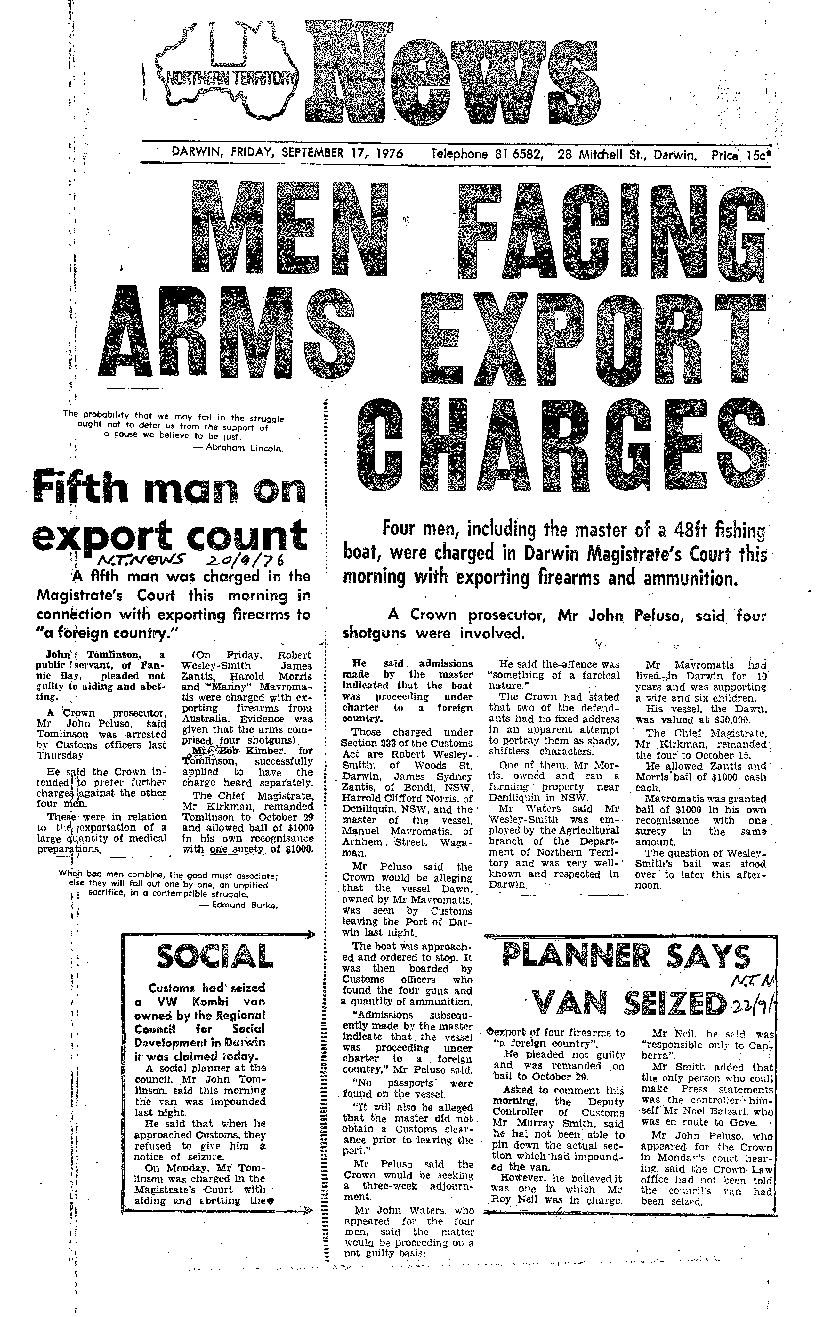
ntnews-1976-caa-18Wes was directly involved in several attempts to break the Indonesian blockade around East Timor and get humanitarian aid to the territory. All attempts failed; the most notable one occurring in late 1976 when he and three others, including former World War II commando Cliff Morris, were forcibly prevented by armed naval and customs officers from going to Timor.

Arrested and charged, under political direction, with exporting medicines and weapons, the four were initially convicted but the verdict was overturned on appeal. This story of the ‘Dawn’ venture, summarised here, is worth a more detailed telling.*

Keeping the faith

From the late 1970s until the dramatic resurgence of Australian activism following the 1991 Santa Cruz massacre, Wes continued to raise the issue and lead public demonstrations wherever possible. Along with others in the 1990s, he was a key presence in the newly-formed Australians for a Free East Timor (AFFET) in Darwin.

Wes was banned from visiting Timor in the lead-up to the 1999 independence ballot, but then spent months working with NGOs in the post-ballot chaos. His account of 117 days in East Timor offers great insight into his energy, commitment and not-always-welcomed passion for East Timor.

The archives

Rob Wesley-Smith’s personal Timor archive is a unique and irreplaceable record of his actions and that of Timor activist activities in Darwin. In addition to a large volume of correspondence, media releases and news clippings dating from 1974 the collection also includes photographs and some rare copies of resistance radio contact.

CHART has produced a preliminary guide to material examined so far. Several institutions in Darwin have expressed interest in eventually holding the collection for long-term preservation and access.

———–

‘Dawn’ venture will be the focus of a future article on this website. See also John Izzard’s colourful 2010 account.


National Archives access restrictions questionable

19 June 2015

We examine the same document in two separate folders at the National Archives of Australia (NAA). One copy has parts blacked-out, the other is not redacted. We ask: Were the specific redactions justifiable and what are the broader implications of this inconsistency at NAA?

To redact or not to redact?

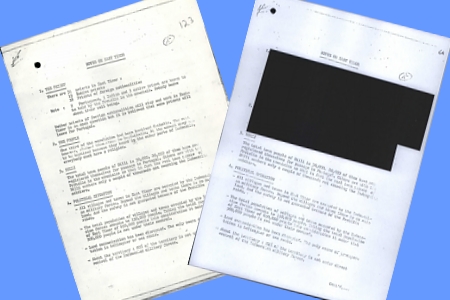
To redact or not to redact? Questions on access restriction decisions.

A late-1976 four-page report, apparently from church-connected sources, offered a rare independent view on conditions inside Indonesian-military-occupied East Timor. The report, broadly confirming Fretilin-led resistance claims, gained  immediate attention from Australian media, NGOs and activists and was analysed for Australian parliamentarians by James Dunn.

The report also came to the attention of the Australian Government at the same time and was assessed by its Department of Foreign Affairs & Trade (DFAT) and the Joint Intelligence Organisation (JIO*). More than thirty years later, the relevant folders from DFAT and JIO were released for public access. The JIO copy of the report was significantly redacted before its release in 2011, but the DFAT copy was left completely uncensored (released 2012).

This inconsistency raises doubts on the reliability of NAA decisions on restricting public access to many Timor documents.

What was redacted?
The unredacted DFAT copy shows that the main JIO redactions obscured references to Timorese, Indonesian or international Church organisations. We can reasonably conclude that the redactions sought to either hide or protect  the unidentified author’s Church connections.

Was the redaction justified?
In terms of personal safety of the authors, there is no doubt that the redacted material was very sensitive in 1976; other comments in both folders stress this. We strongly doubt, however, that the information was still sensitive in 2011 when this redaction was applied – especially since no individual is immediately identifiable.

Formal easons for redactions.

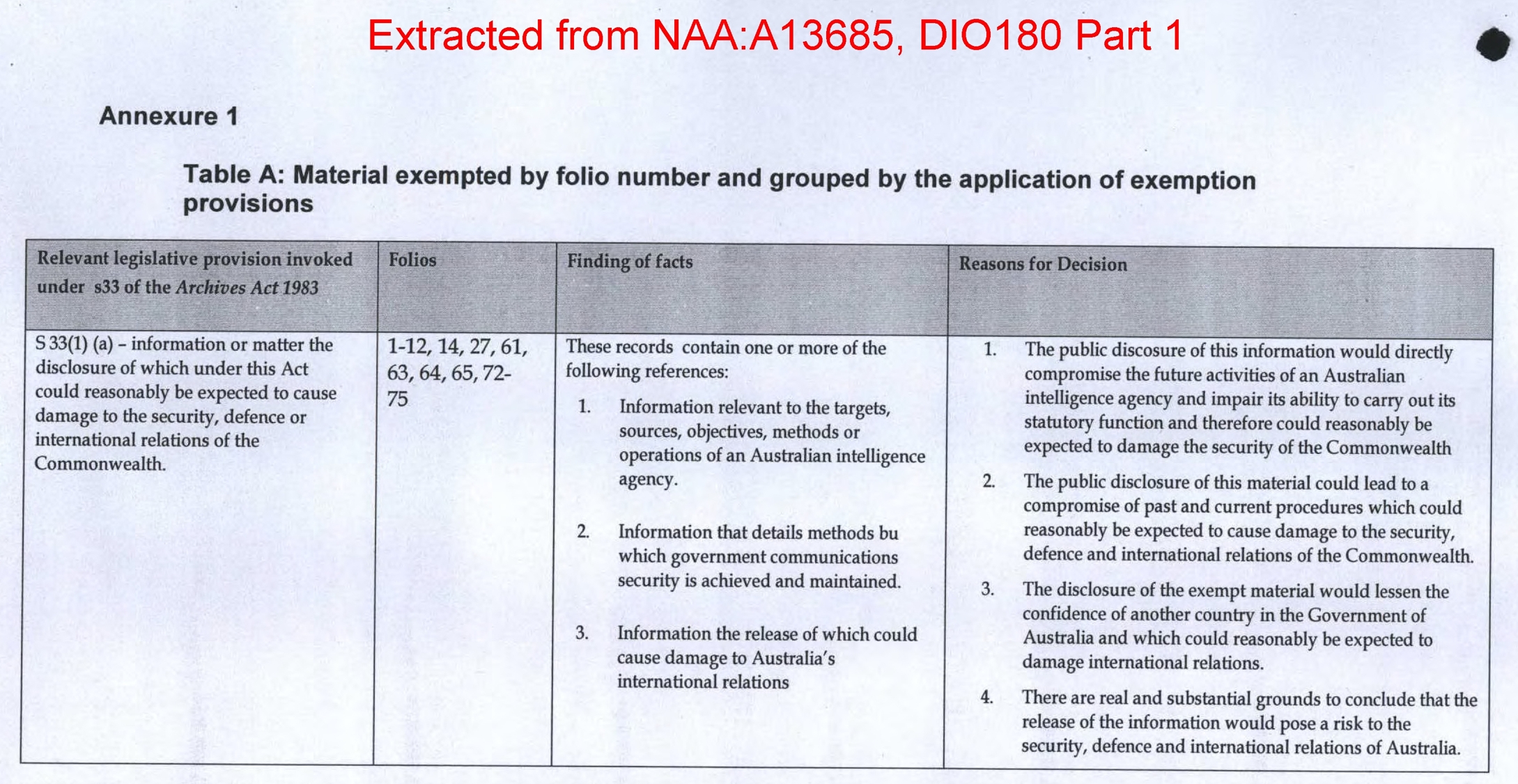
Folios 61-65: Formal reasons for redactions.

The access decision redacting the report in the JIO folder was specifically based on Section 33(1)(a) of the Archives Act. This provision restricts access to any material which “would damage Australia’s security, defence or international relations”. In a close reading of the reasons for redacting this report (click on graphic above), we cannot see any reasonable basis to invoke Section 33(1)(a) in the case of this document.

Our views are effectively confirmed by the access decision on the DFAT folder. Other material in the DFAT folder was redacted or excluded under Section 33(1)(a), but not this particular document. The DFAT folder also contains additional unredacted material about the original source of the document.

What are the implications?
At the very least we can conclude from this example that NAA restrictions** on access through redaction under Section 33(1)(a) are inconsistently applied. Of more concern is the implication from this particular example that redactions in other NAA documents about Timor may be similarly unjustifiable.

A researcher can wait for up to two years*** for a Timor folder to be examined before being released. As Australian researcher Clinton Fernandes has found, challenging NAA redactions after the initial release of documents can be an onerous process. This is particularly so for materials from intelligence agencies like JIO. It is reasonable, then, for researchers to expect the access decision-making processes to be robust.

Regrettably, this present example certainly throws doubt on the reliability or legitimacy of restrictions on access to some materials at NAA.

———–

NOTES:
*JIO was the name of the Australian military’s intelligence arm, now called the Defence Intelligence Organisation (DIO).
** It is very likely in both cases that the access decisions taken were recommended to NAA by the relevant agencies (ie DIO and DFAT). Nonetheless, it is NAA which takes formal responsibility for the decisions.
*** A CHART analysis of wait-times for NAA access decisions is in preparation.


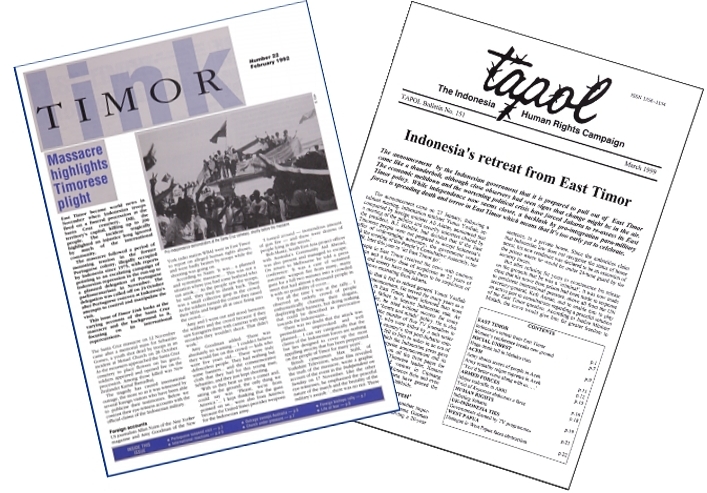
Tapol & Timor Link now online

6 April 2015

tapol-tlink

Two influential print journals which extensively covered occupation and resistance in East Timor are now available online.

They are Tapol Bulletin, published by the UK-based Tapol and  Timor Link, published by London’s Catholic Institute for International Relations (CIIR, now Progressio).

In cooperation with the publishers, the journals were digitised by the Library of Victoria University in Melbourne and are accessible online through the library’s digital research repository. The digitisation project was initiated by CHART.

TAPOL Bulletin
All issues of the printed journal (1973-2008) can be seen here: Tapol – VU Research Repository.

Created by Carmel Budiarjo in 1973 to campaign for the release of political prisoners held since the 1960s by the Suharto regime, Tapol gave increasing attention to the Timor issue from the mid-1970s.

A particular strength of Tapol’s work on Timor was its knowledge of Indonesian language and politics and it played a key role in making internal Indonesian military documents available internationally.

Timor Link
Most of the issues of Timor Link can be seen here: Timor Link – VU Research Repository.

The London-based Catholic Institute for International Relations was a non-government human rights and development  organisation with interests in central America, southern Africa and Asia. CIIR’s pamphlet series, ‘Comment’ tackled the Timor issue in 1982, marking the start of the organisation’s increasingly influential voice on the topic, especially in European human rights and Christian Church circles.

Timor Link became CIIR’s principle vehicle for news and advocacy on Timor from its inception in 1985 until it ceased publication in 2002.

CHART will add links for these journals to its online access point for digitised Timor newsletters – CHART Periodicals.

Acknowledgements
Chart wishes to thank staff of the Victoria University Library for taking on this digitisation project – especially  Ralph Kiel, Adrian Gallagher, Mark Armstrong-Roper, Lyn Wade and Ingrid Unger.

We also wish to thank Tapol and Progressio staff for their most agreeable response to the project idea – especially Paul Barber and Barbara Patilla (Tapol) and Daniel Hale (Progressio).

—————————————————————–

Note on Tapol/CIIR archives
The materials collected and created by Tapol and CIIR during their years of public advocacy on Timor will be of much interest to future researchers.

Tapol archives: Most of the Tapol archive is held by the Mario Soares Foundation (FMS) in Lisbon as part of a larger collection of its Timorese Resistance archive. Some 6,500 items from the Tapol archive can be seen in digital form on the FMS-created database, Casa Comum.

CIIR / Timor Link: CIIR’s extensive collection of Timor materials has been preserved but is not yet available for research access. CHART briefly examined the collection in London in late 2013; further information to come.